Introduction
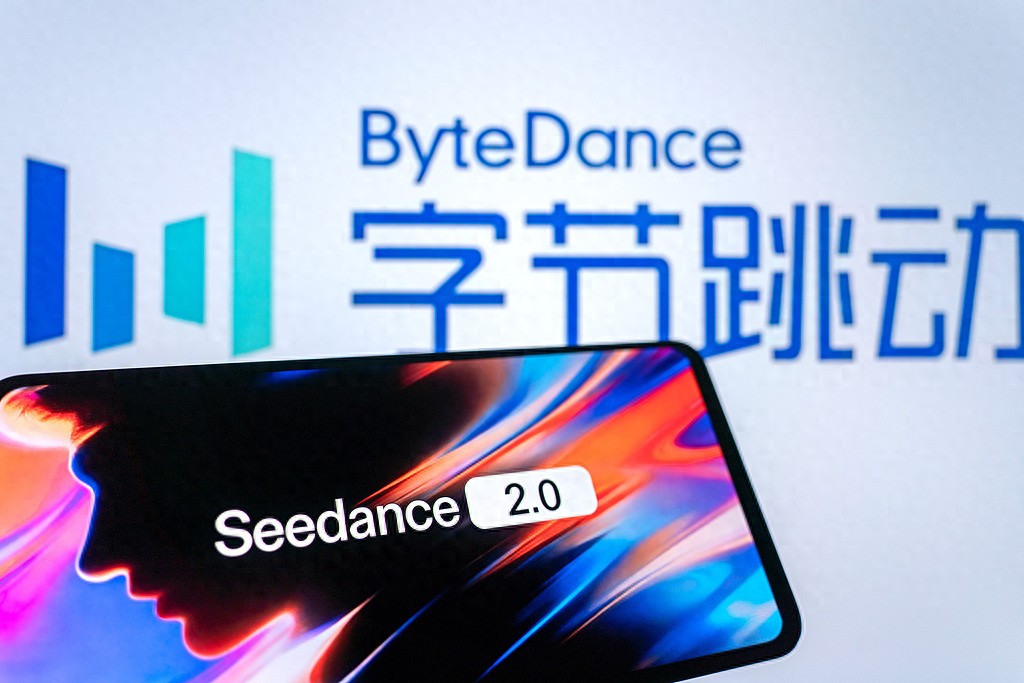
Recently, ByteDance released its next-generation video creation model, Seedance 2.0, quickly gaining global attention.
“The development speed is astonishing,” commented Tesla CEO Elon Musk on social media platform X regarding Seedance 2.0. Renowned tech blogger Linus Ekenstam stated on Instagram, “Seedance 2.0 will explode on the internet; it’s the latest AI video model from China, and it’s incredibly powerful.”
In the past year, AI video generation models have advanced rapidly. Google’s Veo 3 added the ability to generate video clips with audio, while OpenAI launched Sora 2 and a new application that allows users to create videos with “hyper-realistic actions and sounds.” AI startup Runway recently released its Gen-4.5 video generation model, claiming unprecedented accuracy.
The emergence of Seedance 2.0 has created a new wave of competition for OpenAI and Google. Meanwhile, Kuaishou’s recently launched Kling 3.0 model has also garnered more attention, indicating that the race in this field is becoming increasingly crowded.
However, the technological leap of Seedance 2.0 has reignited concerns about deepfakes and copyright protection, issues that models like Sora 2 have also faced. According to a report from CCTV on February 13, Seedance 2.0 has urgently suspended its ability to reference real human materials. At this moment, the safety barriers and regulatory oversight of AI models are undergoing stricter scrutiny.
Key Transition to Industrial-Grade Workflows
“Synchronizing jumps, aerial spins, and precise landings.” In a demonstration video shared by ByteDance, two figure skaters performed a series of complex movements. The company stated that the Seedance 2.0 model effectively portrayed a range of high-difficulty actions while adhering to the laws of motion in the real world, avoiding the physical errors commonly seen in previous AI videos.
For years, AI video generators have struggled with a simple question: they do not understand how the real world operates, making it difficult to meet the needs of serious commercial applications.
In overseas tech communities, there are numerous evaluations comparing Seedance 2.0 with performance metrics of Sora 2 and Veo 3. A user in the AI community on the American forum Reddit pointed out that Seedance 2.0 demonstrated physical realism in handling complex action scenes, resolving the “scene collapse” issue that Sora models often faced (where the image exhibits unnatural distortions, disappearances, reconfigurations, or logical breaks).
Multiple evaluations show that one of the most significant technological leaps of Seedance 2.0 lies in its “four-modal” input system. Sora 2 and Veo 3.1 typically rely on a single text prompt and one reference image, while Seedance 2.0 allows users to input up to nine images, three video clips, and three audio files simultaneously.
Indian tech media Digit highlighted in an article titled “Seedance 2.0: This Chinese AI Video Tool’s Development Speed Surpasses Veo 3 and Sora 2” that unlike OpenAI and Google, which focus on extending video duration and improving lighting and physical effects, ByteDance has chosen a different route: prioritizing fine controllability and reliability in production. This marks a critical shift in AI video production towards industrial-grade workflows, addressing issues of character image drift, audio-visual desynchronization, and the inability to accurately execute complex directorial instructions in AI filmmaking.
In a market where video models are updated almost daily, Seedance 2.0 expands the boundaries of AI video generation while increasing ethical and regulatory pressures.
Lessons from Deepfakes and Copyright Issues
Recently, an AI-generated short video showing actors Tom Cruise and Brad Pitt fighting on a rooftop went viral on social media. It was created by Irish film director and producer Luey Robinson using Seedance 2.0, with subsequent versions adding dialogue and different camera angles. What shocked industry insiders was not only the realism but also the ease of production, requiring no actors, stunt teams, crews, or studios—just a few lines of text prompts.
Additionally, other adapted videos generated by Seedance 2.0 have circulated online, including short films based on works like Spider-Man, Titanic, Stranger Things, The Lord of the Rings, and Shrek.
“I hate to say it, but we might be done. Soon, someone will sit at their computer and generate a film indistinguishable from existing Hollywood movies,” commented Rhett Reese, writer of the Deadpool series, on the Tom Cruise and Brad Pitt fighting video.
On February 12, the Motion Picture Association (MPA) released a statement saying, “Within just one day, China’s Seedance 2.0 has been used on a large scale to infringe upon U.S. copyrighted works without authorization. By launching a service that lacks effective infringement protections, ByteDance disregards established copyright laws that protect creators’ rights and support millions of jobs in the U.S. ByteDance must immediately cease its infringing activities.”
The MPA’s comments were not specifically targeting Chinese products; shortly after OpenAI released Sora 2 last fall, the organization made similar remarks when many users generated videos of well-known IP characters, leading to numerous infringement issues. At that time, the MPA stated, “OpenAI needs to take decisive action to address this issue. Mature copyright laws protecting creators’ rights are equally applicable here.”
In response to copyright issues, OpenAI changed its copyright usage rules from “opt-in by default” to “explicit authorization required.” Subsequently, Disney reached an agreement with OpenAI to allow Sora 2 to use its 200 characters, which is seen as a potential template for other film companies to follow.
Copyright disputes are viewed as a collision between the “black box” nature of training data for generative AI models and traditional copyright protection systems, a challenge not unique to Chinese models. It remains unclear whether ByteDance will adopt a similar approach to OpenAI.
More problematic than copyright risks is the issue of deepfakes. The Seedance 2.0 model has the capability to deeply replicate personal biometric information; for example, by inputting just one real photo, the model can generate a voice and tone highly similar to the individual. In response to user feedback, ByteDance promptly suspended the “real human material reference” feature, and users will be notified that real human face references are not supported when using Seedance 2.0.
Meanwhile, when using Seedance 2.0 on the Dream App and Doubao App, the platforms have implemented “live verification” measures, requiring users to record their image and voice for real-person verification before creating digital avatars to appear in AI videos. This is not only a public relations emergency response but may also serve as a boundary definition for “technological sovereignty.”
Sora and Veo have also faced challenges in preventing deepfakes over the past year and are continuously strengthening their measures. In the early release of Sora 2, users attempting to generate videos of deceased celebrities sparked strong protests. OpenAI responded by actively scanning the text input into the model, intercepting all generation requests for public figures. The latest version has also integrated computer vision, which will immediately reject attempts to create fakes using a celebrity’s photo.
Google has introduced digital watermarks for videos generated by Veo 3, marking them as AI-generated. Additionally, Veo enforces automatic stylization processing when detecting that the input image contains real humans, particularly minors, to reduce the risk of deepfakes.
Furthermore, both Sora and Veo are members of C2PA (Coalition for Content Provenance and Authenticity), and every exported video carries immutable metadata indicating its source and method of generation, marking a departure from the early chaotic growth of AI-generated videos. However, with technological iterations, the existing review systems will still face challenges.
From Technological Competition to Shared Regulatory Challenges
From DeepSeek to Seedance, the popularity of Chinese AI products is no coincidence. An independent think tank, the Australian Strategic Policy Institute (ASPI), released a report at the end of last year evaluating 74 current and emerging technologies, revealing that China ranks first in 66 of these technologies, including nuclear energy, synthetic biology, and small satellites; while the U.S. leads in the remaining eight, including quantum computing and geoengineering.
According to a report by Nature magazine in December last year, David Lin, a security and technology strategy expert at the U.S. non-governmental research organization Special Competitive Studies Project (SCSP), noted a significant finding: China is surpassing the U.S. in cloud computing and edge computing. Cloud computing allows AI companies to train models and process data without physical infrastructure, while edge computing processes data locally. China’s research intensity in these areas “may reflect Beijing’s efforts to push AI from the lab to practical deployment.”
China is committed to parallel development and regulation of AI. In January, the revised Cybersecurity Law of the People’s Republic of China officially came into effect, which includes new provisions to promote the development of artificial intelligence—“The state supports the research and development of key technologies such as fundamental theories and algorithms for artificial intelligence, promotes the construction of training data resources and computing power infrastructure, improves ethical norms for artificial intelligence, strengthens risk monitoring and assessment, and promotes the application and healthy development of artificial intelligence.”
In addition, China has established extensive regulations regarding harmful content, privacy, and data security, such as the “Interim Measures for the Management of Generative Artificial Intelligence Services,” which began implementation in 2023, already having legal practices in “identifying generated content” and “preventing deepfakes.”
In contrast, the U.S. has yet to establish comprehensive AI legislation at the federal level. In January, former President Trump signed a new AI executive order aimed at eliminating barriers to U.S. leadership in AI, rescinding a previous executive order issued by the Biden administration.
The EU’s AI Act, expected to pass in 2024, represents a milestone in comprehensive AI legislation, categorizing AI systems for regulatory oversight based on risk levels. The four levels have different transparency and oversight rules, with some provisions already enforced since last August, including rules for “general AI” (GPAI) models. Dozens of tech companies in Europe oppose the implementation of this act, arguing it poses risks to Europe’s AI ambitions. The EU announced in November last year a delay in implementing some provisions of the act, highlighting the challenge of achieving a careful balance between regulation and innovation.
Globally, the only legally binding international regulatory framework for AI comes from the Council of Europe, which established the “AI Framework Convention” in May 2024, requiring any signatory country to fulfill broad obligations through its domestic laws, such as ensuring AI activities comply with human rights. However, no sanctions mechanism or supranational enforcement agency has been established.
In July last year, the Chinese government proposed the establishment of a World AI Cooperation Organization to strengthen international cooperation in the field of AI. In terms of AI governance, it hopes to gradually form a global governance framework and standards for artificial intelligence with broad consensus, fully respecting the policy and practice differences of various countries.
Comments
Discussion is powered by Giscus (GitHub Discussions). Add
repo,repoID,category, andcategoryIDunder[params.comments.giscus]inhugo.tomlusing the values from the Giscus setup tool.